
Doctoral Dispatches | My Tour de Europe: The Year I Tried to Study on the Road
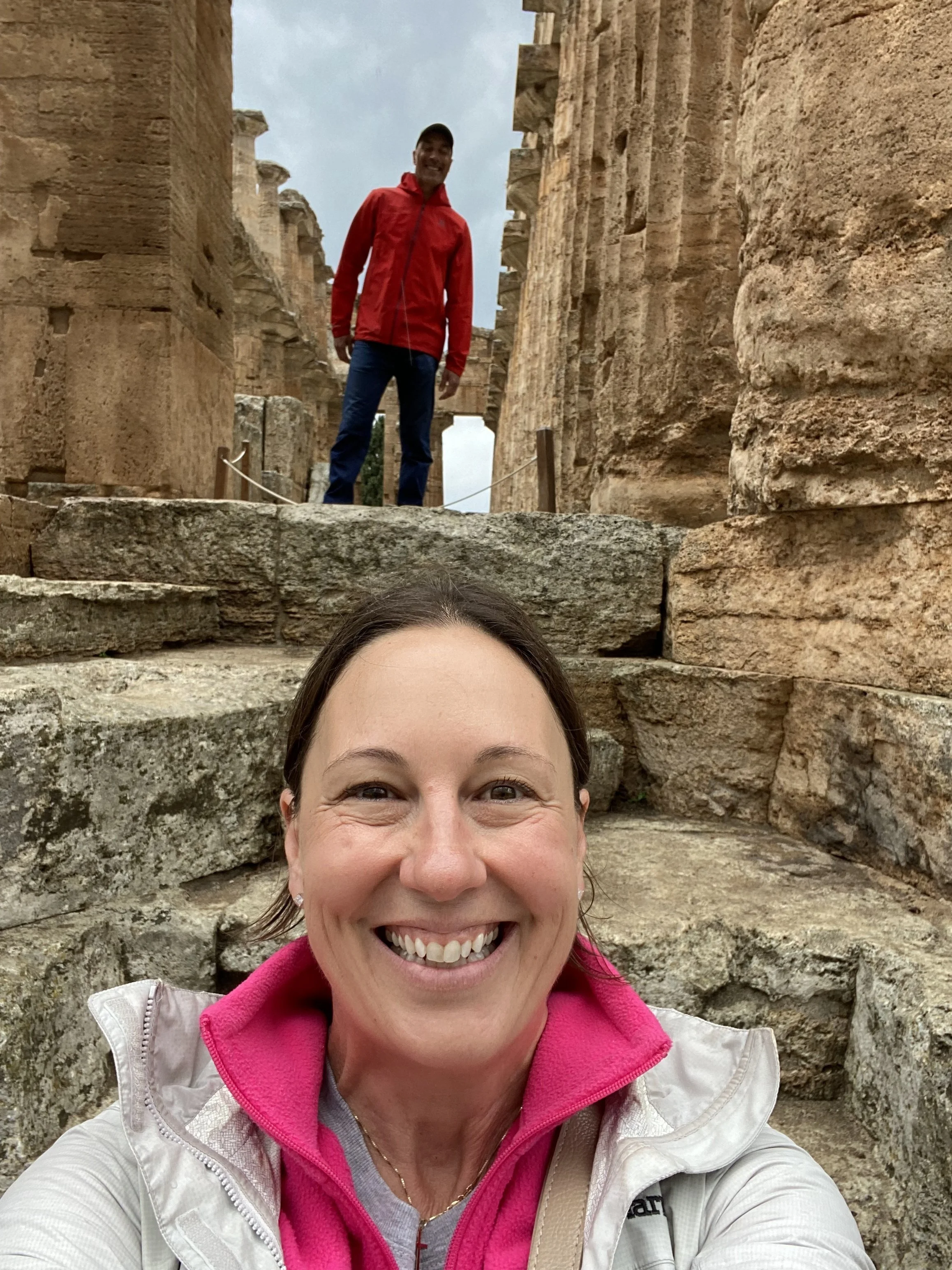
Somewhere between the Tuscan hills and the Scottish Highlands, I learned a hard truth:
I am terrible at doing scholarly work on the road.
I went into my two-month Tour de Europe this year with grand illusions — that I would write profound papers while sipping espresso in Florence, attend my doctoral seminars from sunlit patios in Italy, and reflect on complexity theory while gliding smoothly through the Alps on a high-speed train.
Reality, as it turns out, had other plans.
Episode 1: The 100-Kilometre Detour
Let’s begin with my most humbling moment — boarding the wrong train. Not the wrong seat, not the wrong platform, but the wrong direction. By the time we realized, we were almost 100 kilometres away from where we were supposed to be, hurtling toward a city that wasn’t even on our itinerary.
Cue the frantic dash off the train, the scramble across platforms, the replanned route in a very expensive Uber, the half-sprint, half-pray to make it back before the next class. We did make it, technically — two hours late — just in time to miss the session and nearly the boat safety orientation that followed.
For those keeping score, that was Complexity Theory: 1, Laura: 0.
Episode 2: The Great Time Zone Debacle
Then came my personal favourite: the time zone disaster.
Apparently, the UK and Central Europe are not on the same clock (who knew?). Well, me, but the typo on my trusty Google calendar didn’t reflect the change, no matter how planned and organized it made me feel!! I logged on early one afternoon, proud of myself for being prompt — only to realize, after setting up Starlink in a parking lot of the local “shopping mall”, that I was an hour early.
That would’ve been fine, except my newfound punctuality meant I’d now miss the 5 p.m. check-in for our countryside rental — located, naturally, in the middle of nowhere, reachable only by a winding gravel path and vague instructions that included the words “look for the blue gate after the second olive tree.”
For those looking for the score update - Complexity Theory: 2, Laura: 0.
Episode 3: Starlink, Trees, and the Gods of Concrete
Ah, Starlink — my faithful companion and occasional nemesis.
When it worked, it was a miracle: a crisp connection, a full signal, and a sense of hope that yes, maybe remote scholarship was possible after all. When it didn’t, it was because of… trees. Or concrete. Or windows. Or sometimes just the position of the moon, it seemed.
I gave more speeches to clusters of trees and parked cars than to my actual doctoral cohort. I attended an entire virtual discussion on “organizational adaptability” while sitting in a last-minute Airbnb with spotty Wi-Fi and intermittent power, chanting, “I am adaptable, I am adaptable.”
Complexity Theory: 3, Laura: 0.
The Unexpected Wins
But here’s the thing: amidst the chaos — the missed trains, dropped signals, time zone mishaps, and mobile classrooms — came the kind of reflection that can’t be scheduled on a syllabus.
Walking 97 kilometers along Scotland’s whisky trail gave me time to truly think about complexity theory — not just as an academic construct, but as a lived experience in how the local whisky scene emerged over time. The constant adaptation, the feedback loops, the small decisions that compound into big outcomes — all of it felt suddenly tangible.
Standing in my dad's village in the Czech Republic, hearing stories from my family about the Velvet Revolution gave me clarity on dissipative systems and their role in bottom-up change. Revolutions, after all, don’t begin in boardrooms. They begin with ordinary people who decide to act — the most human expression of self-organization there is.
And visiting Pompeii and the ancient ruins of Rome reminded me how fragile civilizations really are. Democracies, institutions, even entire cultures — none are permanent. They survive only through stewardship. Through people who show up, adapt, and care enough to maintain what matters.
That realization hit differently while walking through ruins once described as “eternal.”
What I Learned
So yes, I failed miserably at meeting scholarly deadlines. I joined classes from farm roads and missed more than one entirely. My Wi-Fi had a personality disorder, and my time zones had trust issues.
But I gained something equally important: the reminder that learning isn’t only about reading — it’s about living.
Complexity isn’t just in systems; it’s in train schedules, in patchy signals, in ancient cities and modern messes. And somehow, in that chaos, meaning emerges.
So here’s to the professors who kept their patience, the cohort who laughed with me instead of at me (mostly), and to every scholar who’s ever thought, “Sure, I can do homework from a train.”
You can. Just… maybe double-check the destination first.